VI.1919.12–18 — The Seven Seals of the Gates
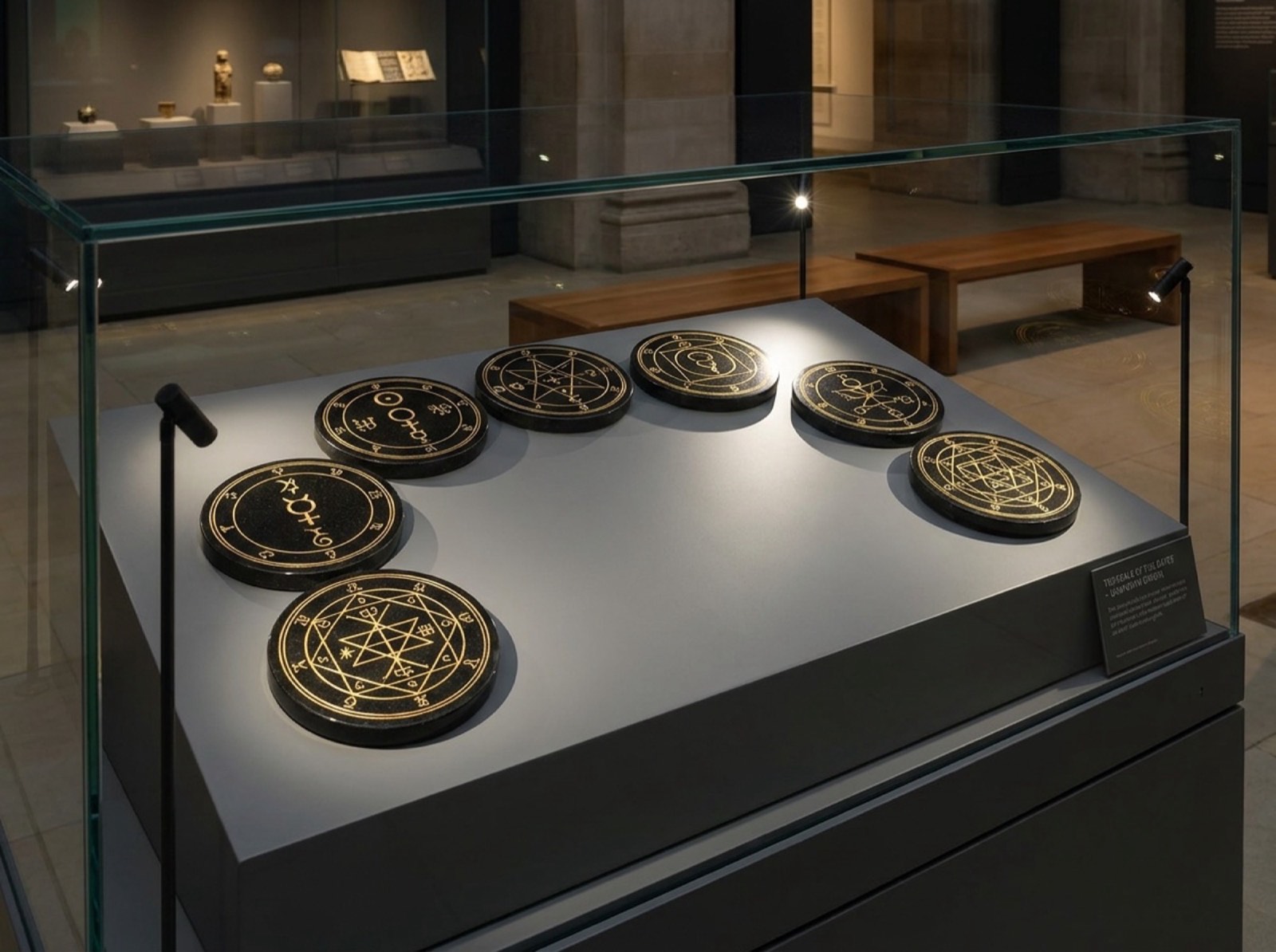
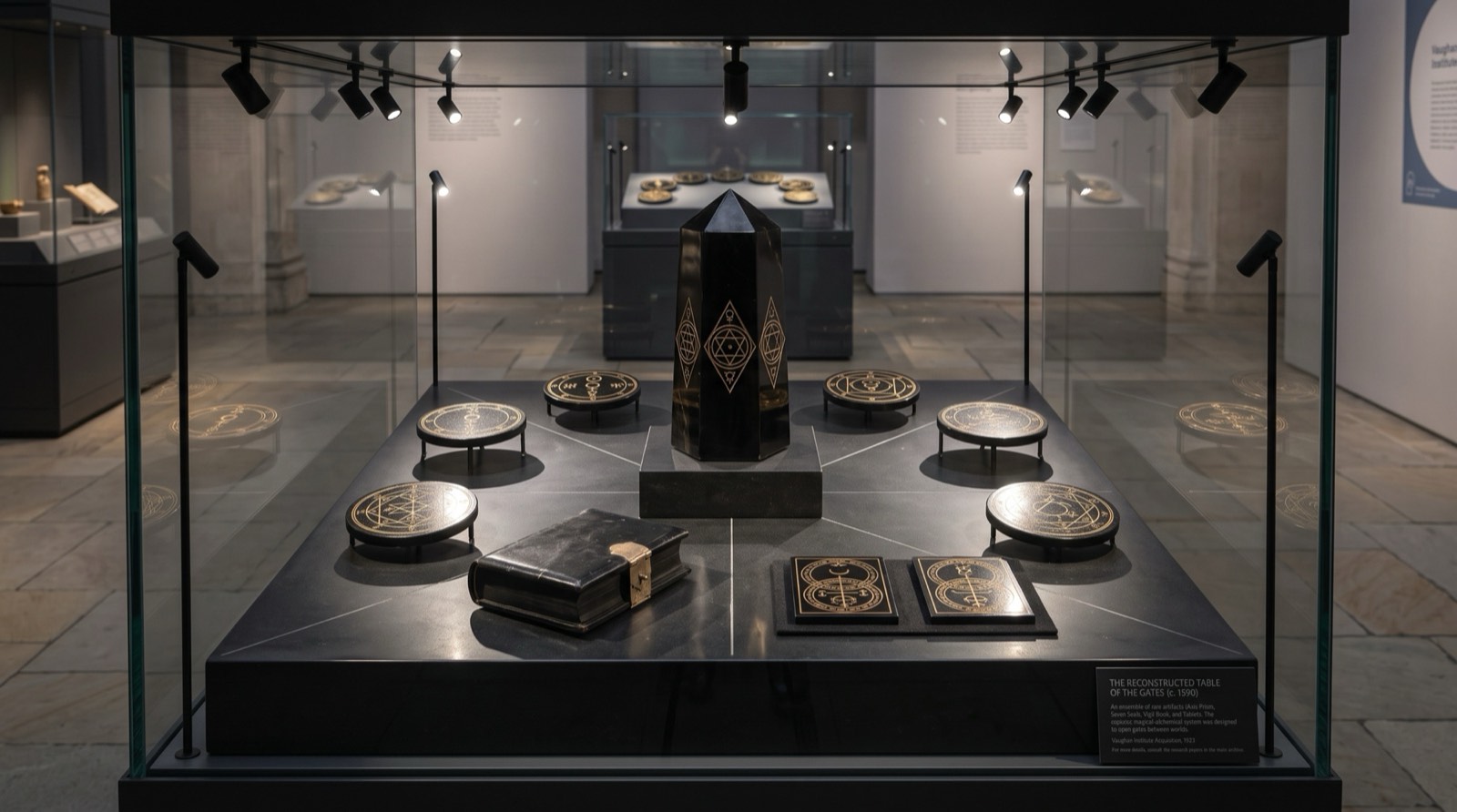
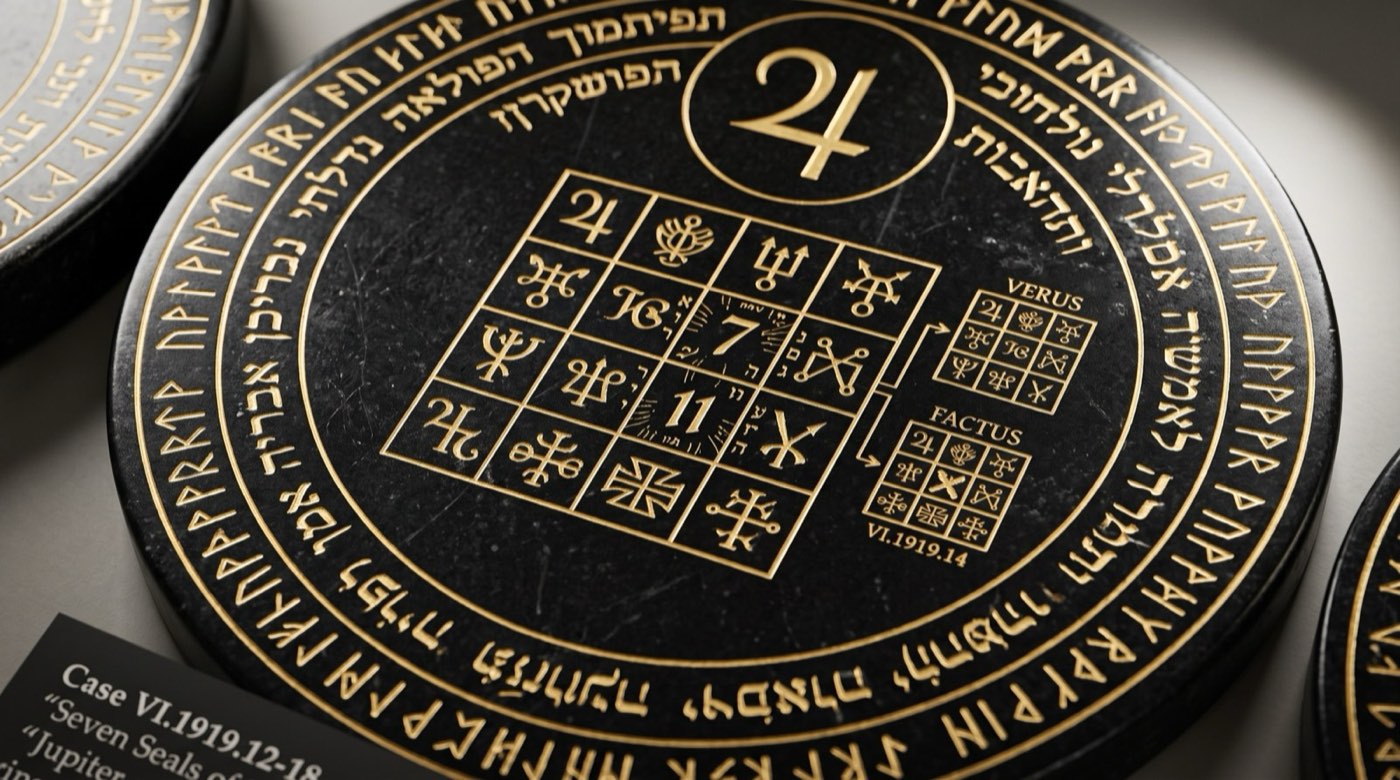
Note. The figures derive from the planetary pentacles of the Clavicula Salomonis tradition, of which the British Library's Sloane manuscripts preserve the best-known exemplars. They are not, however, copies. Each seal departs from its exemplar systematically — in the cell-order of the inscribed squares and in the track of the sigil lines — and the deviations are consistent across all seven, as though executed to a rule the Institute has not recovered. A study, “On the deviations in the Seals of the Gates,” appeared in Cygnus and reached no conclusion.
One nineteenth-century reader pencilled against the Sun's square that “the burnt cells still count” — the annotation is not explained.
The deviation, in the one case the Institute has reduced to arithmetic, is an ordering: the exemplar's letters re-entered in the walk of the planet's own square. A pencilled demonstration survives on the study's flyleaf — the word SACRAMENT, nine letters, re-entered by the square of three: RTA / CAE / NSM.